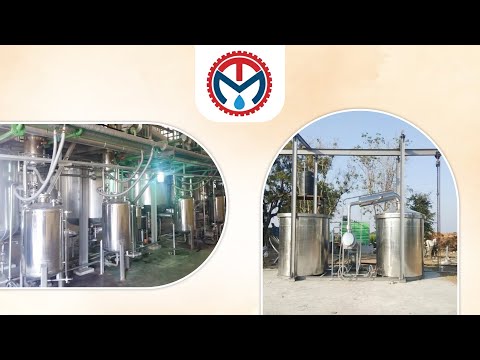
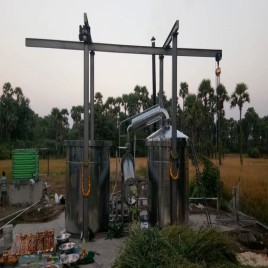
An Agarwood (hydro) oil distillation plant is a specialized facility designed to extract essential oil—commonly known as oud or oudh oil—from the resinous heartwood of the agarwood tree (Aquilaria spp.) using the hydro-distillation method. This process is prized for producing high-quality, aromatic oil used in perfumery, incense, and traditional medicine.Key Features and ProcessRaw Material Selection: Only resin-rich agarwood chips or dust, typically from infected or matured trees, are chosen. The quality and age of the wood significantly influence the oil yield and aroma.Preparation: The wood is chopped into small pieces or ground into powder. Sometimes, the chips are soaked in water for several days to weeks, softening the material and enhancing oil extraction.Hydro-Distillation Process:The prepared agarwood is fully submerged in water inside a distillation still, forming a "soup".The still is heated to boiling, causing the water and wood mixture to release steam containing volatile aromatic compounds.The steam rises, carrying the essential oil molecules, and is then condensed back into liquid form.The resulting distillate separates into two layers: the essential oil (which floats on top) and the hydrosol (distilled water).The oil is carefully decanted and collected for further processing.Filtration and Refinement: The crude oil is filtered to remove impurities, ensuring purity and quality.Quality Control and Packaging: The final oil is tested for fragrance, chemical composition, and purity before being bottled in airtight, light-resistant containers.